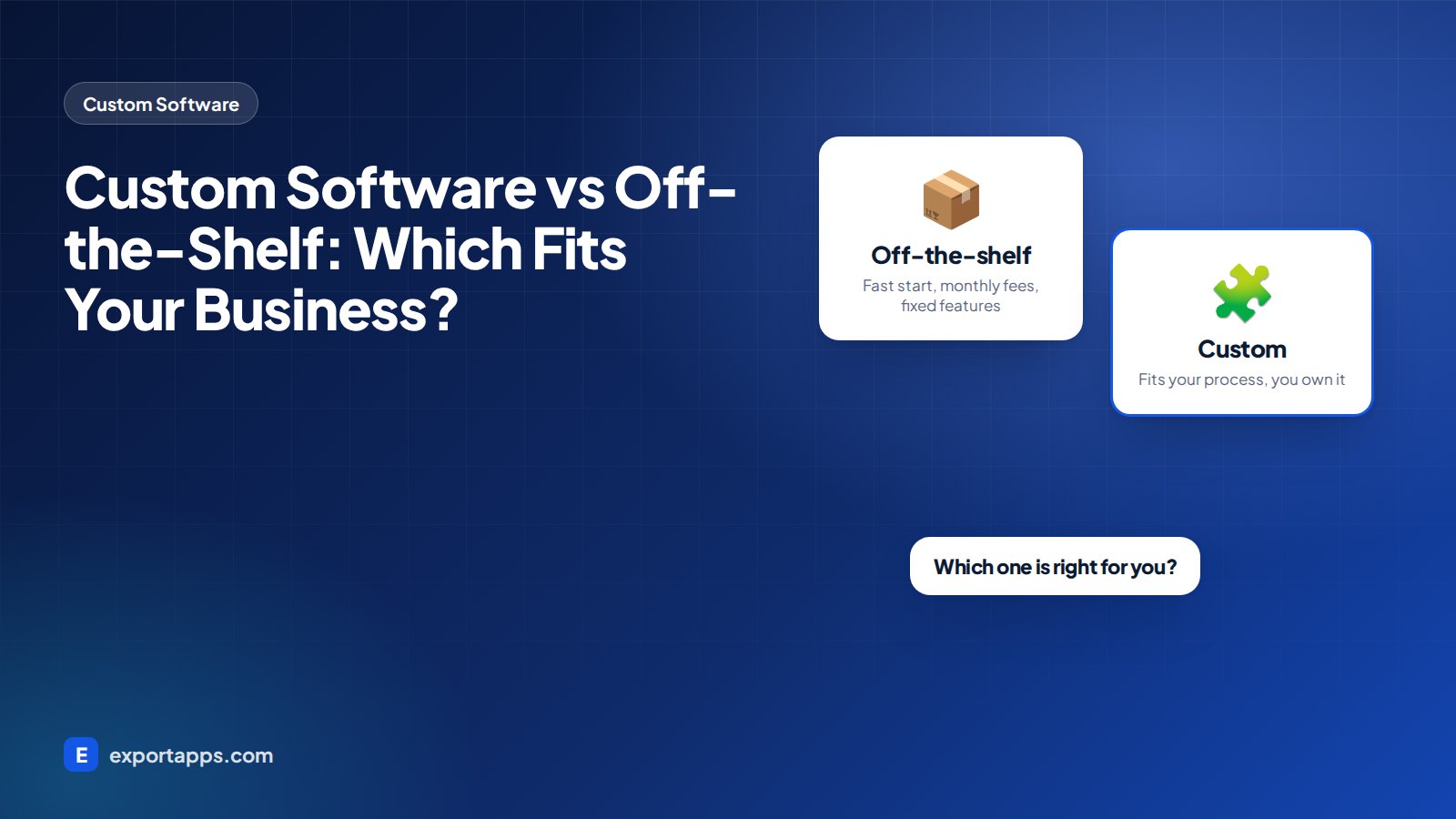
Ready-made software is fast and cheap to start. Custom software fits your business exactly. Here is how to decide which one you need.
Every growing business reaches the point where spreadsheets and generic tools stop keeping up. At that moment you have two choices: buy a ready-made product, or build software designed around the way you work.
Neither choice is always right. This guide helps you decide.
What is off-the-shelf software?
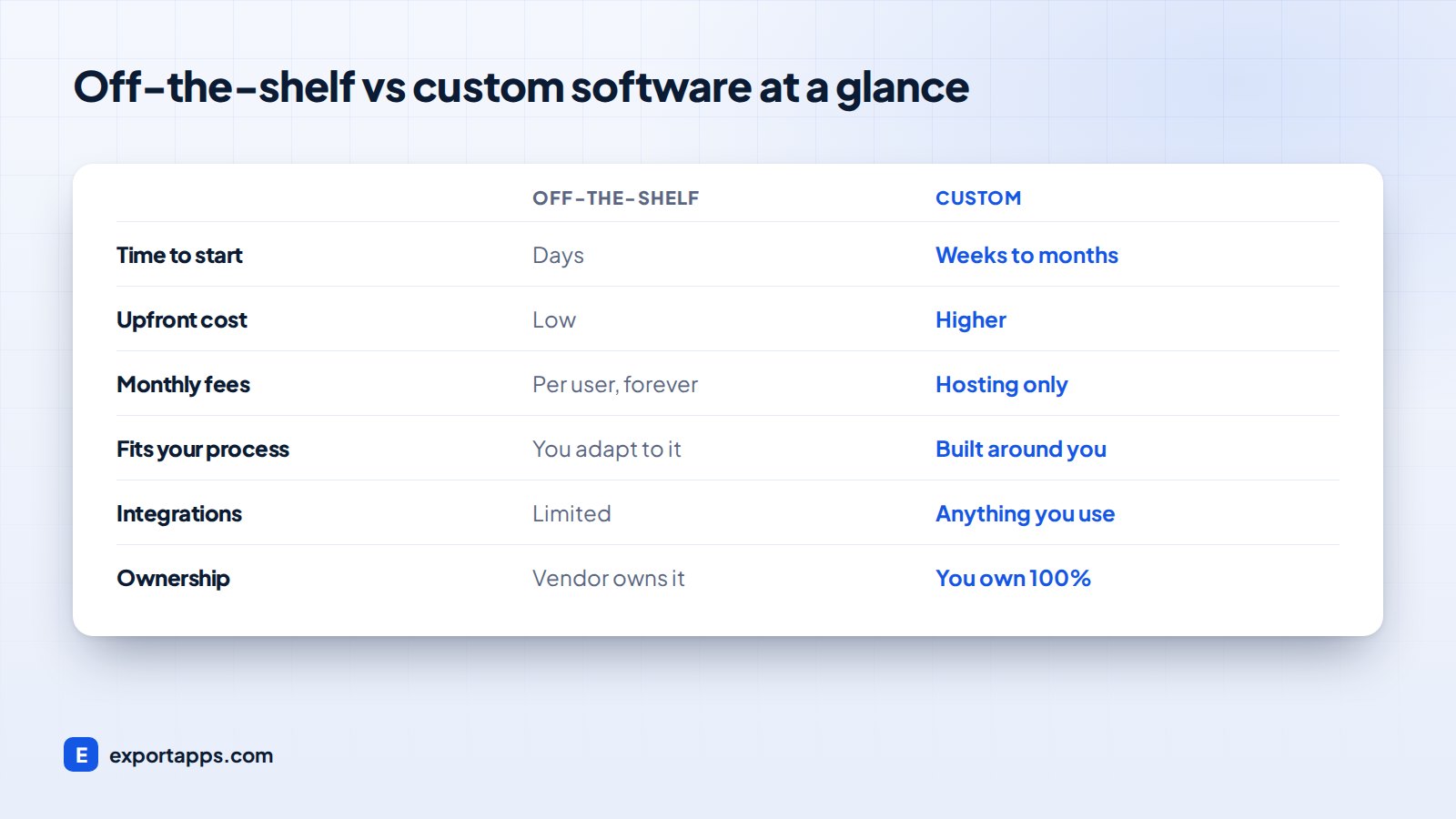
Off-the-shelf software is a ready-made product sold to many businesses, usually as a monthly subscription. Examples include accounting tools, CRMs, e-commerce platforms and project management apps.
Advantages
- Fast to start, often the same day
- Low upfront cost
- Updates and hosting are handled for you
- Large user communities and documentation
Disadvantages
- You adapt your process to the software, not the other way around
- Subscription costs grow with every user and feature
- Limited integrations with your other systems
- Your data and workflows depend on another company's roadmap and pricing
What is custom software?
Custom software is built specifically for your business, around your processes, customers and data.
Advantages
- Fits your workflow exactly, so no workarounds
- You own it, with no per-user fees forever
- Connects to every system you already use
- Can become a competitive advantage that others cannot buy
Disadvantages
- Higher upfront investment
- Takes weeks or months to build
- Needs a reliable partner for maintenance
How to decide
Choose off-the-shelf when:
- The process is standard for your industry, such as payroll or basic accounting
- A popular tool already covers 90 percent of what you need
- You need something working this week
Choose custom software when:
- Your process is what makes you different from competitors
- Your team uses several tools plus spreadsheets to complete one job
- Subscription costs are growing fast as your team grows
- You need customers, staff and partners to use one connected system
- You want to sell the software itself as a product
Custom software can also include automation. Learn how AI agents can handle routine work inside your own system.
The middle path
Many businesses combine both. They keep standard tools for accounting and email, and build a custom platform for their core operations that connects everything together. This often gives the best return on investment.
Look at the total cost over three years
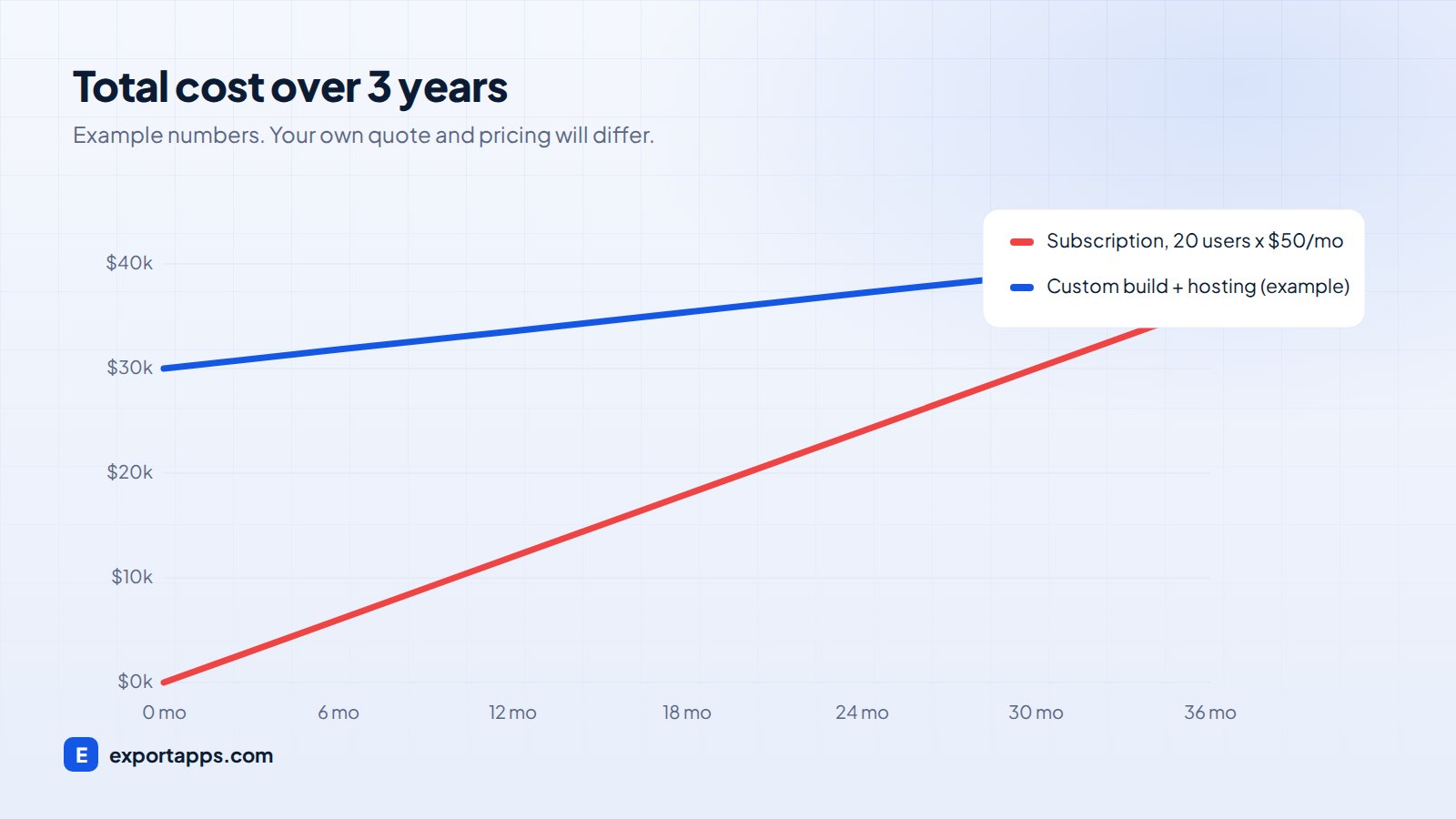
A subscription that costs $50 per user per month looks cheap. With 20 users, it costs $36,000 over three years, and you own nothing at the end. Compare that with the cost of a custom system plus maintenance over the same period. The answer is often surprising.
If you decide to build, read how to choose a software development company first.
Not sure which path fits?
Talk to our team. We will look at your current tools and processes and tell you honestly whether custom software makes sense, or whether an existing product will do the job.