App costs range from a few thousand dollars to several hundred thousand. Here is what drives the price and how to plan a realistic budget.
"How much will my app cost?" is the first question almost every founder and business owner asks. The honest answer is that it depends on what the app does. But the factors that drive the price are well known, and once you understand them you can plan a realistic budget.
Typical price ranges
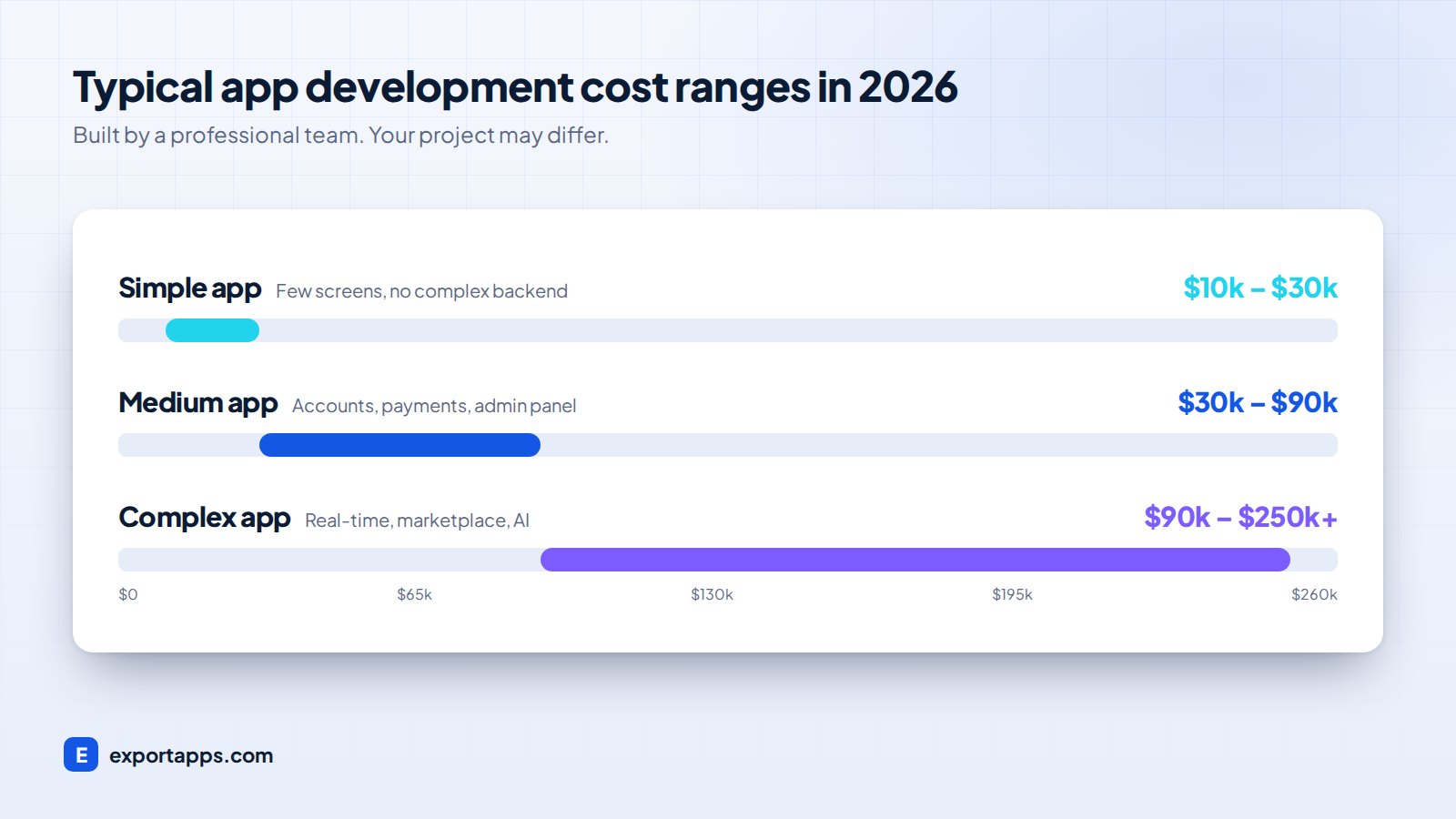
These are typical ranges for apps built by a professional team in 2026. Your project may fall outside them.
- Simple app (a few screens, no complex backend, for example a calculator, a catalog or an event app): roughly $10,000 to $30,000
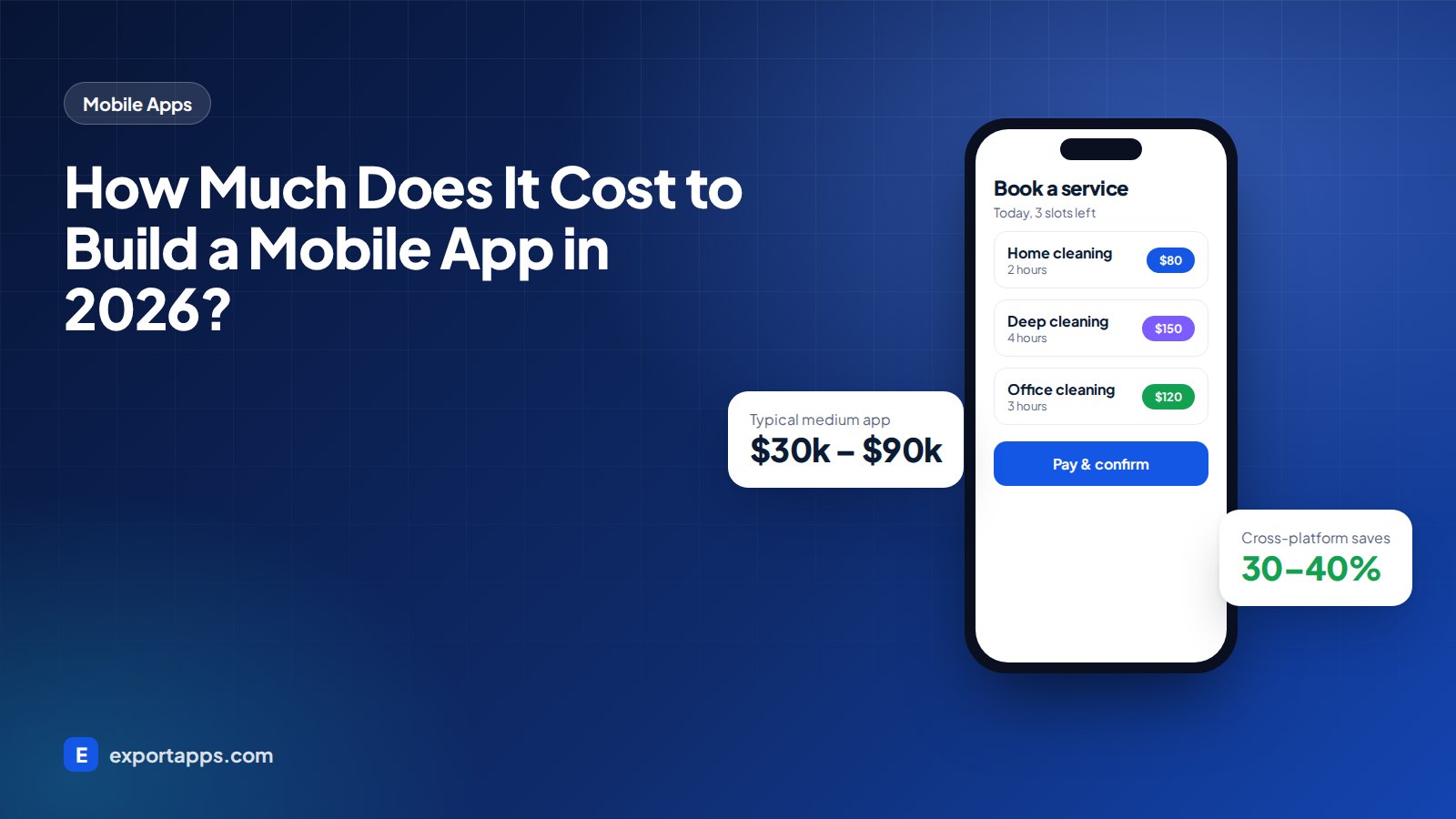
- Medium app (user accounts, payments, notifications, an admin panel, for example a booking or delivery app): roughly $30,000 to $90,000
- Complex app (real-time features, marketplaces, video, AI features, many integrations): $90,000 and up
What drives the cost
1. Number and complexity of features
Every feature takes design, development and testing. Login, payments, chat, maps, real-time tracking and AI each add time. The fastest way to control cost is to decide which features are essential for launch and which can wait.
2. iOS, Android or both
Building two separate native apps costs more than one. Cross-platform tools such as Flutter and React Native let one team build for both iPhone and Android from one codebase, often saving 30 to 40 percent compared with two native apps.
3. Design
A clean design based on standard components costs less than a fully custom design with complex animations. Good design is still worth paying for, because it directly affects whether people keep using your app.
4. Backend and admin panel
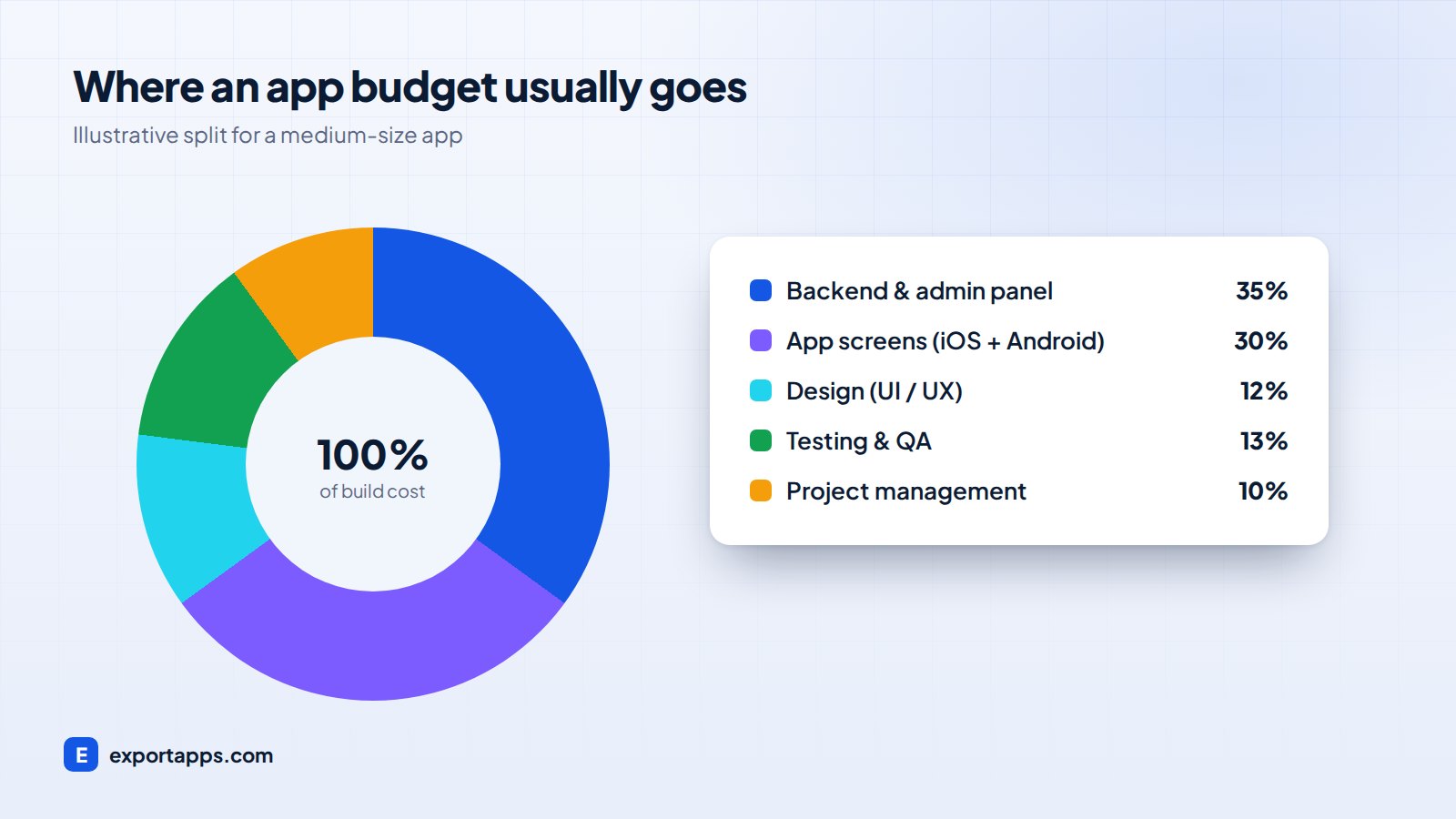
Most apps need a server, a database and an admin panel to manage users, orders and content. This is often 30 to 50 percent of the total work, and it is easy to forget when budgeting.
5. Integrations
Connecting to payment gateways, CRMs, accounting software, shipping providers or your existing systems adds work, especially when those systems have poor documentation.
6. Who builds it
Hourly rates vary widely by country and experience. A cheaper team that takes twice as long, or produces code that must be rewritten, is not cheaper. Compare the total project cost and the quality of past work, not only the hourly rate.
Not sure whether you need an app at all? Compare the options in web app vs mobile app.
Costs after launch
Plan for ongoing costs too:
- Hosting and services: from a few dollars to several hundred dollars per month, depending on users
- App store fees: Apple charges $99 per year; Google charges a one-time $25
- Maintenance: updates for new iOS and Android versions, security patches and bug fixes. A common rule of thumb is 15 to 20 percent of the build cost per year.
How to reduce the cost without cutting quality
- Start with an MVP. Launch with the smallest set of features that solves the main problem, then grow based on real user feedback.
- Use cross-platform development when your app does not need deep device-specific features.
- Write clear requirements. Vague requirements lead to rework. A short discovery phase pays for itself.
- Reuse proven services for login, payments and notifications instead of building them from scratch.
Before you request quotes, read how to choose a software development company so you can compare offers fairly.
Get a real number for your idea
Price ranges help you plan, but only a conversation about your specific features gives you a real number. Tell us about your app idea and we will send a free, fixed quote with a clear breakdown.