Building a SaaS product means more than writing code. Learn the 7 steps from idea validation to launch, plus typical costs and common mistakes.
Software as a service (SaaS) is an attractive business model: customers pay a subscription, you improve one product for everyone, and revenue can grow month after month. But many founders underestimate what a SaaS product needs beyond the core feature. This SaaS development guide explains the full picture, so you can plan your build, budget and launch with confidence.
Whether you are a first-time founder or a business turning an internal tool into a product, the steps below will help you avoid the most common and expensive mistakes.
What makes SaaS different from other software
A SaaS product is not just an app. It is a service you run for many customers at once. That brings extra requirements:
- Multi-tenancy: many customers share one system, but each sees only their own data
- Subscriptions and billing: plans, trials, upgrades, invoices and taxes
- User management: sign-up, login, teams, roles and permissions
- Reliability: customers expect the product to be available whenever they need it
- Security and privacy: you store other businesses' data, which raises the bar
- Continuous updates: you ship improvements without breaking anything for existing users
If you are still deciding whether to build or buy for your own business, read custom software vs off-the-shelf. If you are building SaaS to sell, read on.
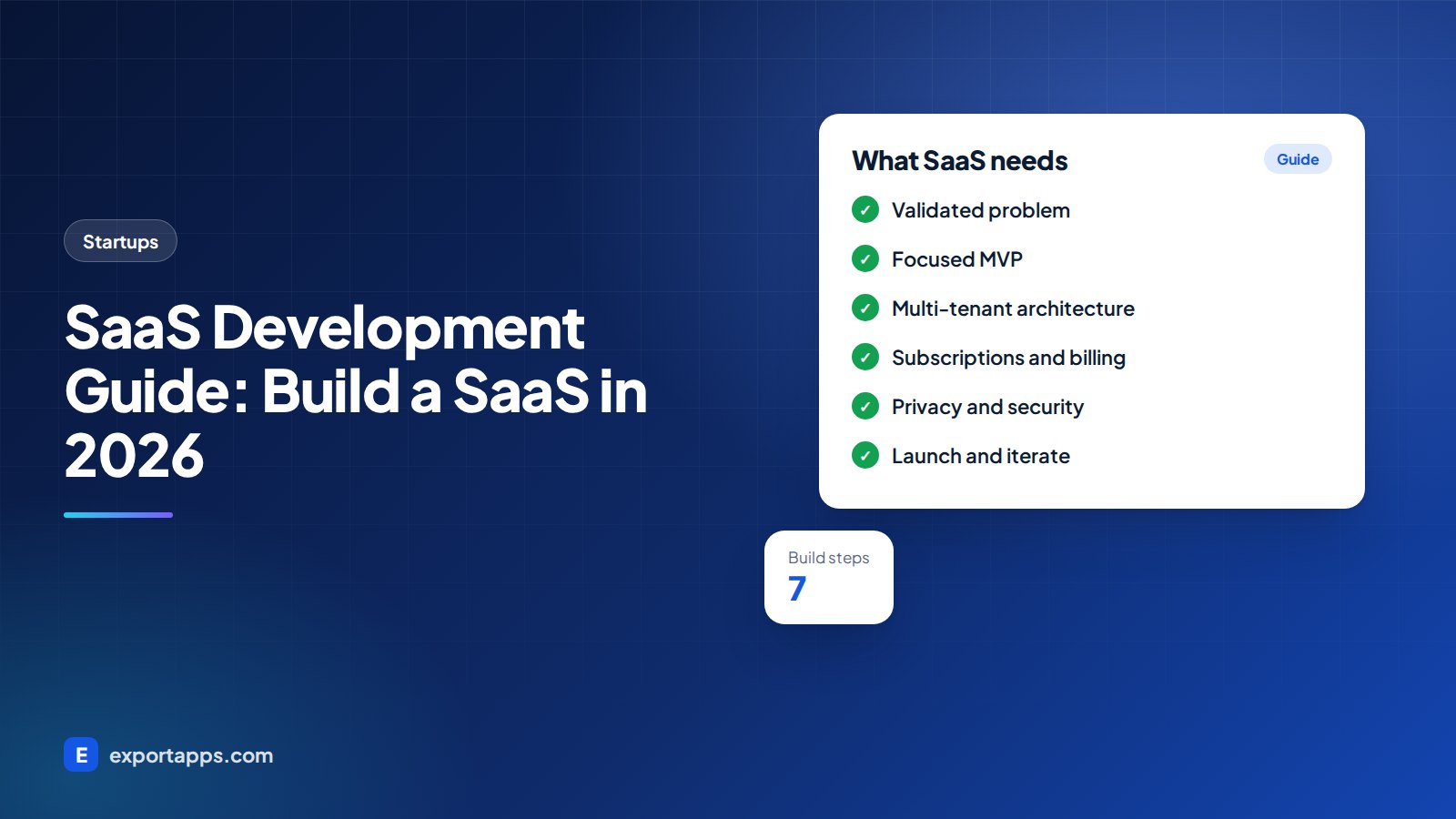
The SaaS development process: 7 steps

1. Validate the problem
Before you build anything, talk to potential customers. Ask how they solve the problem today, what it costs them and what they would pay to fix it. Try to get early commitments: a waiting list, letters of intent or pre-orders. Validation is the cheapest insurance you can buy.
2. Define a focused MVP
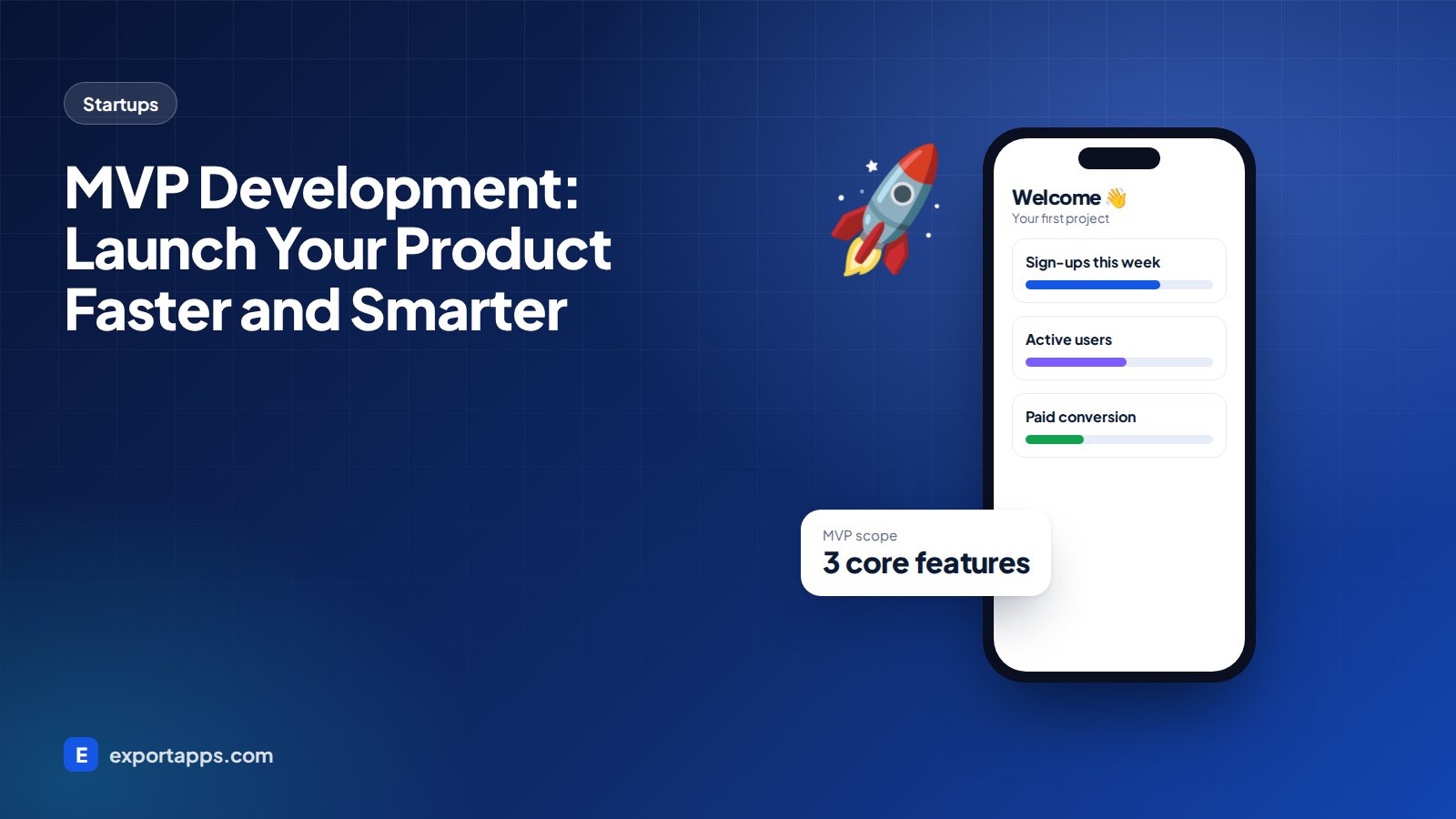
List every feature you want, then cut it down to the smallest version that solves the core problem for one type of customer. Keep billing, sign-up and an admin panel, because you need those to run a real business. Our MVP development guide explains how to prioritize.
3. Design the user experience
SaaS customers often decide in the first few minutes of a trial whether to stay. Design a clear onboarding flow, an obvious first "win" and simple settings. Wireframes and a clickable prototype let you test this with real users before development.
4. Choose your architecture and tech stack
Key decisions include:
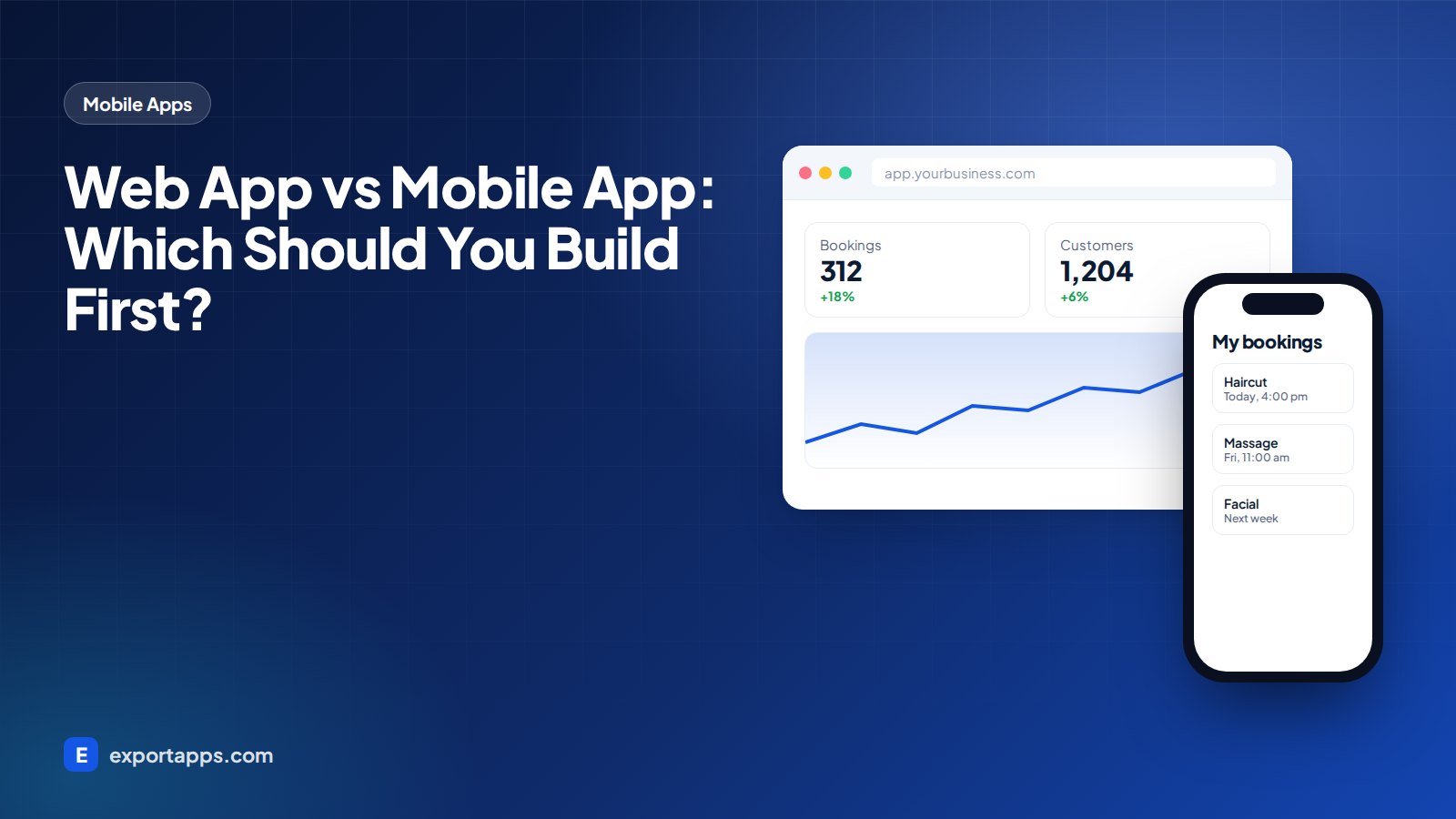
- Web, mobile or both: most SaaS starts as a web app. See web app vs mobile app.
- Tenancy model: shared database with tenant separation, or separate databases for larger customers
- Cloud hosting: a major cloud provider with backups, monitoring and room to scale
- Integrations: single sign-on, email, payments, analytics and the tools your customers already use
Choose proven, well-supported technology over the newest trend. You want a stack that many developers know, so you can hire later.
5. Build in short iterations
Develop in one or two week sprints, with a working demo at the end of each. Build the foundations early (accounts, permissions, billing) so features sit on a stable base. Use automated tests and a staging environment so updates are safe.
6. Prepare billing, legal and compliance
Connect a subscription billing provider to handle plans, trials, invoices and failed payments. Sales tax and VAT rules differ between the USA, UK, Canada and the EU, so get advice early. Write clear terms of service and a privacy policy, and design for data protection laws: GDPR in the EU, UK GDPR, PIPEDA in Canada and CCPA in California. Our privacy-compliant software guide covers the basics. This is not legal advice.
7. Launch, measure and improve
Start with a beta group, then open to the public. Track sign-ups, activation, retention and churn. Talk to customers who leave as well as those who stay. Use what you learn to plan the next release.
Typical SaaS development costs

These are typical ranges for a professional team in 2026. Your project may differ.
- Simple SaaS MVP (one core workflow, accounts, billing, basic admin): roughly $25,000 to $60,000 (about £20,000 to £48,000, €23,000 to €55,000 or CAD 34,000 to CAD 82,000)
- Growth-stage SaaS (teams and roles, integrations, reporting, more polish): roughly $60,000 to $150,000
- Complex or enterprise SaaS (advanced permissions, single sign-on, audit logs, heavy integrations, AI features): roughly $150,000 to $400,000 and up
Ongoing costs matter too: hosting, third-party services, support and continuous development. For a deeper breakdown, see our guide to custom software development cost.
Features most SaaS products need
- Sign-up, login and password reset
- Teams, roles and permissions
- Subscription plans, trials and invoices
- An admin dashboard for your own team
- Email notifications
- Audit logs and data export
- Basic analytics on product usage
- A help center or in-app support
You will not need everything in your MVP, but plan your architecture so these can be added without rework.
Adding AI to your SaaS
Many new SaaS products include AI features such as smart search, summaries or automated tasks. Start with one feature that saves users clear time, and be transparent about how customer data is used. Our article on AI agents for business shows practical examples.
Choosing a pricing model
Your pricing affects how you build billing, so decide early. Common SaaS pricing models include:
- Flat rate: one price for everyone. Simple to build and explain.
- Tiered plans: for example Basic, Pro and Business, each with more features or limits.
- Per seat: price per user, popular for team tools.
- Usage-based: price by volume, such as messages sent or records stored.
- Free trial or freemium: let users try before they pay.
Many products start with two or three simple tiers and a free trial, then adjust based on real customer behavior. Show prices in the currency your customers use (USD, GBP, EUR or CAD) and be clear whether taxes such as VAT are included.
Common SaaS development mistakes
- Building for months without talking to customers
- Leaving billing and permissions until the end
- Choosing an unusual tech stack that is hard to hire for
- Ignoring onboarding, so trial users never see the value
- No plan for backups, monitoring or security updates
- Hiring the cheapest team without checking SaaS experience. See how to hire app developers for what to check.
Frequently asked questions
How long does it take to build a SaaS product?
A focused SaaS MVP often takes around three to five months. More complex platforms can take six to twelve months or longer. These are typical ranges, and your project may differ.
How much does SaaS development cost?
A simple SaaS MVP typically costs around $25,000 to $60,000. Growth-stage and enterprise SaaS products cost more, depending on features, integrations and compliance needs.
Should my SaaS be a web app or a mobile app?
Most SaaS products start as a web app because it works on any device and is easier to update. Add mobile apps later if your users need them on the go.
Do I need to worry about GDPR if my SaaS is based in the USA?
If you have customers or users in the EU or UK, GDPR or UK GDPR can apply even if your company is in the USA. Plan for privacy from day one and get legal advice for your situation.
Build your SaaS with a team that has done it before
Export Apps helps founders plan, design and build SaaS products, from first MVP to scalable platform. Explore our custom software development services and MVP and product design services, then book a free consultation. We will give you a clear, fixed quote for your first version.